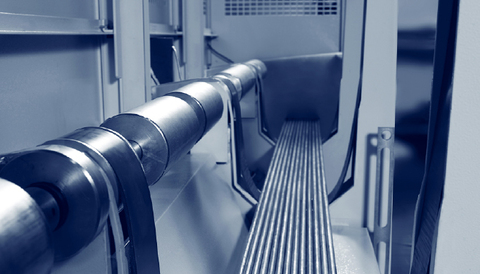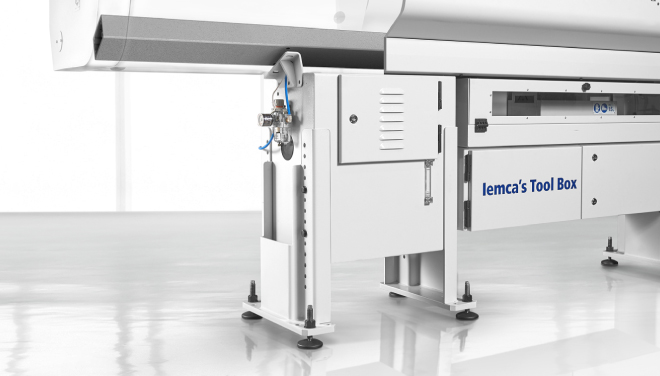
If you are considering the purchase of a bar feeder for your fixed-headstock lathe, you may be facing the choice between a long or short feeder.
The decision depends on numerous technical, production, and logistical factors. Knowing when to prefer a long solution over a short one is essential to fully leverage the potential of your production setup and achieve the highest return on investment.
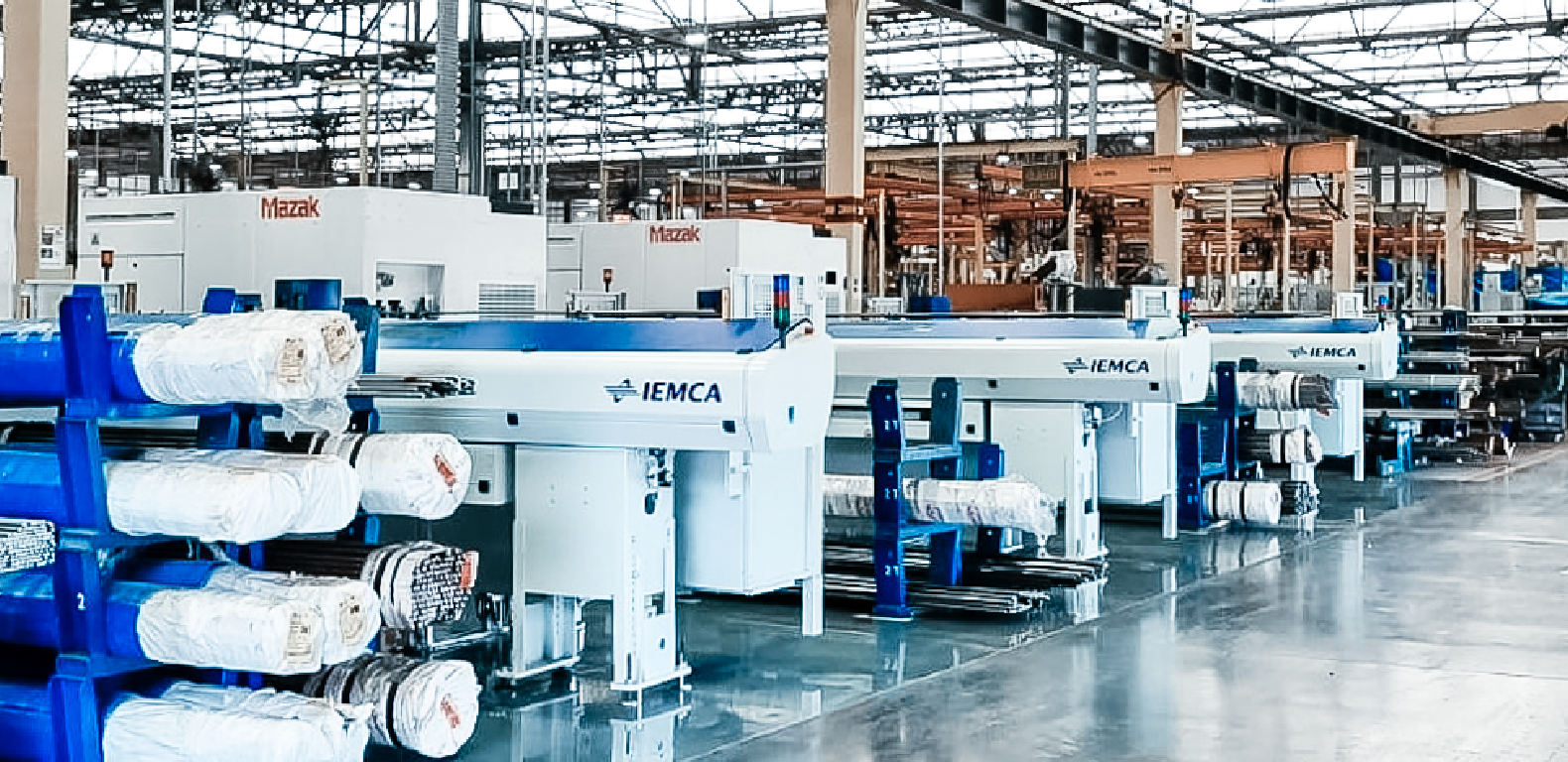
A long bar feeder is capable of handling an entire bar between 2 and 6 meters in length, without the need for cutting, even beyond the spindle length of the lathe.
This type of feeder handles the bar rotating inside it, autonomously manages the recovery of the remnant at the end of machining, and is widely used even on sliding-headstock applications because it can follow the movements of the sliding headstock.
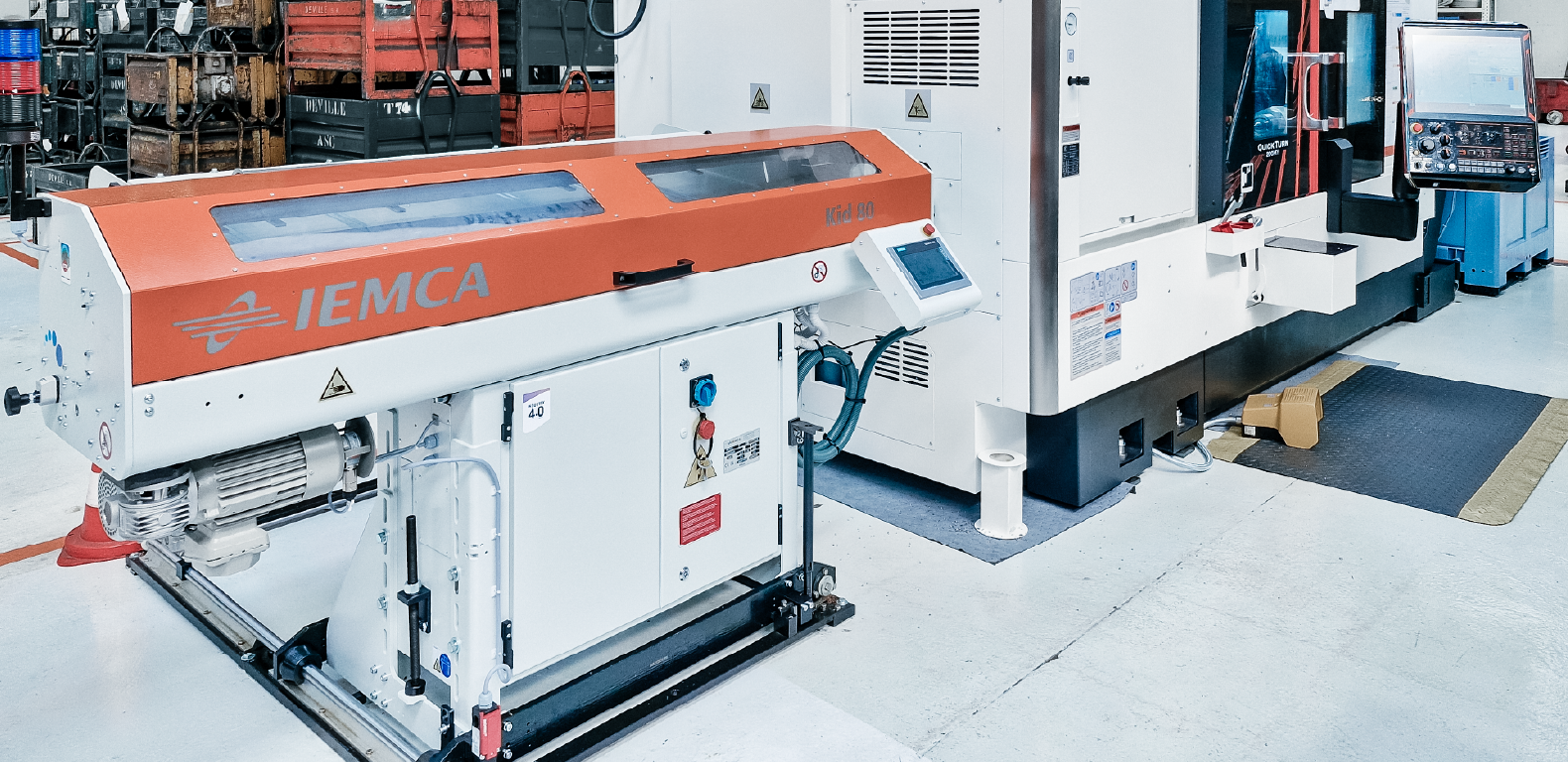
A short loader, on the other hand, is a feeder with more compact dimensions. It does not house the bar being machined inside it, and does not include remnant recovery.
The choice between a long bar feeder and a short loader depends on multiple variables related to the application and production requirements. Floor space is only the most immediately visible aspect: in reality, many other factors come into play, such as compatibility with the lathe model, batch size, the need to optimize cycle times, and the demand for greater flexibility.
It is advisable to opt for a long bar feeder if you recognize yourself in one or more of the following scenarios:
If you work with bars longer than the spindle - for example, among the most common commercial lengths, 3 meters - a long bar feeder allows you to load them in full length, without the need for cutting.
The material can be loaded directly at the machine, without any prior preparation, saving time, effort, and costs.
Using a long bar feeder makes it possible to produce only one remnant per bar, because it can load the full bar without requiring cutting. This significantly reduces waste, improving raw material utilization.
The benefit grows proportionally with bar length: even better results are obtained with bars not only 3 meters long, but also 4 or 6 meters.
Materials such as premium alloys or special steels often have high costs and long procurement times. A long bar feeder allows you to make the most of each bar, generating only one remnant per cycle.
This optimizes raw material usage, reduces waste, and leads to significant savings.
One of the main advantages of a long bar feeder is its greater production autonomy.
Extended work cycles - for example, longer than 8 hours a day - or the machining of long parts requiring a significant section of the bar result in higher material consumption.
The use of a long bar feeder ensures a greater onboard storage capacity. This increases the amount of material available in the magazine and reduces interruptions for loading new bars, allowing the lathe to operate longer without pauses.
The long bar feeder is the ideal solution to support unattended production. Thanks to its ability to store longer bars in greater quantities, the lathe can operate autonomously for extended periods, with no need for frequent manual intervention.
This means machines can run during extended shifts, ensuring production continuity and maximizing overall efficiency.
Find the bar feeder that fits your workshop →

Choosing a long bar feeder represents a strategic investment when your production requires autonomy, continuity, and reduced operating costs. It is the ideal solution for workshops that:
Before deciding between a long bar feeder and a short loader, carefully assess your specific context: production volume, type of parts being machined, available space, and automation goals.
A thorough analysis of your needs will allow you to choose the most suitable solution and maximize your return on investment.