How to reduce vibrations when turning on fixed headstock thanks to the bar guidance system | IEMCA
30/05/2025
Turning

When machining on fixed-head lathes, vibrations cannot be avoided: what matters is knowing how to manage and minimize them.
This is a natural phenomenon, linked to the dynamics of the interaction between the spindle system, cutting tool, and workpiece. If not properly controlled, vibrations can compromise the quality of the surface finish, reduce tool life, damage the spindle, and, more generally, negatively impact overall productivity.
To properly manage vibrations, it is essential to understand the variables that influence their generation. Among these, an often overlooked element is the bar feeder chosen to complement the fixed-head lathe – and in particular the characteristics of its bar guiding system.
Fixed-head lathes often machine long bars: even the slightest instability can generate significant vibrations. For this reason, the bar feeder's guiding system plays a fundamental role in ensuring bar stability and reducing vibrations throughout the work cycle.
An effective guiding system is able to adapt as closely as possible to the diameter of the bar being machined, guiding it smoothly during rotation to minimize oscillations and misalignments.
An optimal guiding system does more than simply contain the bar: every single detail must be designed to actively absorb and dampen vibrations, protecting the machine and preserving the final quality of the part. High-damping material and guide channel adjustable according to diameter help to improve the installation's setup and its ability to manage vibrations.
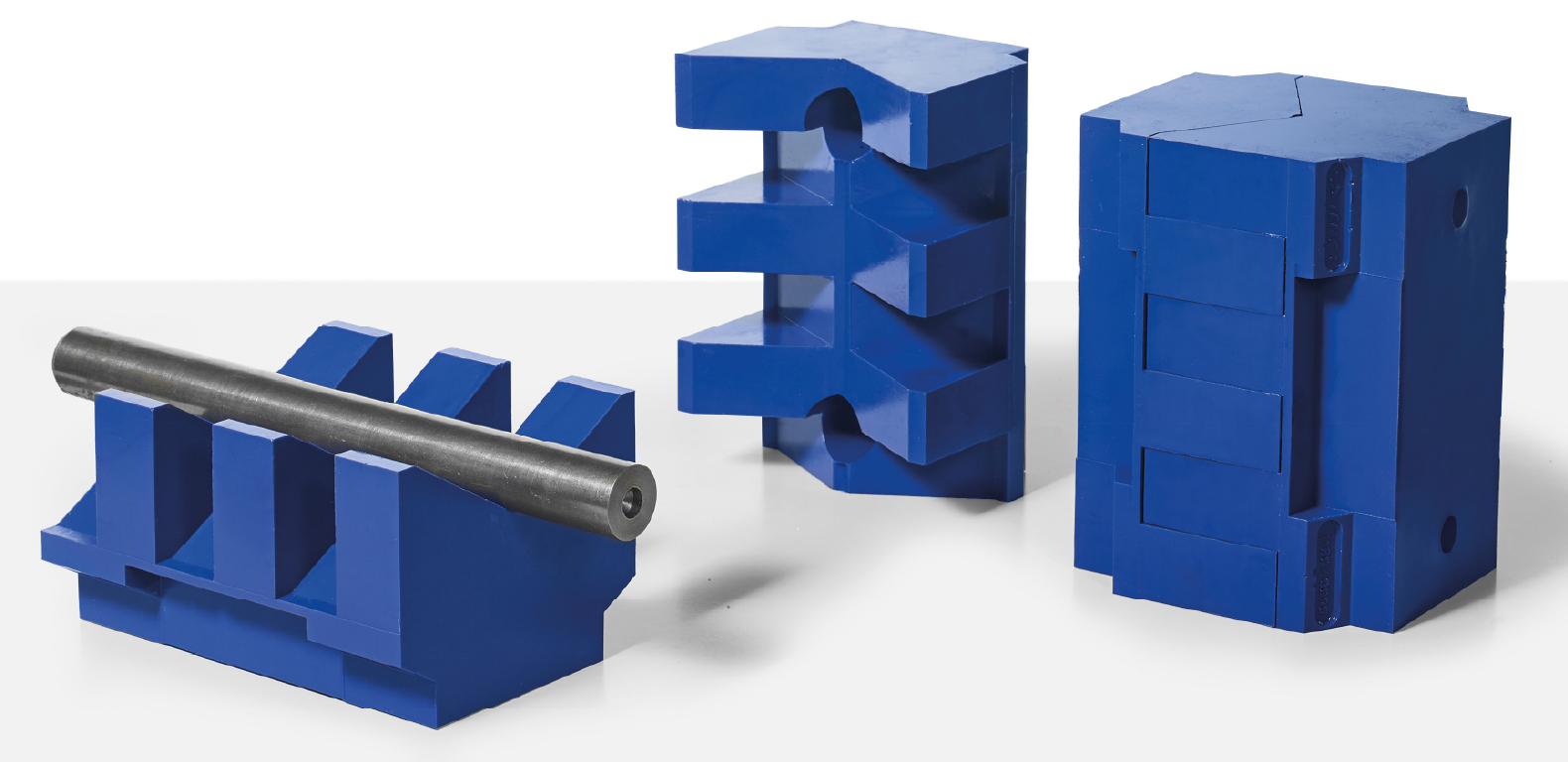
Bar feeders for fixed-head lathes IEMCA MAESTRO are designed to ensure optimal bar guidance within the spindle, even in the most complex and demanding applications. Particular attention has been paid to developing an effective vibration management solution.
The MAESTRO range is equipped with the patented IEMCA ABACOS (Adaptive BAR Control System), which uses self-adjusting bushings that adapt to the diameter of the bar being machined.
The self-adjusting bushings automatically adapt to the diameter, to optimally guide the bar throughout the work cycle.
Thanks to the innovative shape of the bushings, the ABACOS system provides 4 contact points with the bar, of constant length (regardless of diameter), ensuring precise and effective support.
The system is equipped with a lubrication circuit that reduces friction between the bushings and the bar, ensuring smoother rotation.
The integrated pneumatic system actively absorbs vibrations generated during machining, minimizing the impact on the installation.
The bushings are made of a material specifically designed to dampen vibrations.
The ABACOS system is able to tighten the bar pusher , automatically adapting to its diameter: this neutralizes any potential interference and ensures maximum stability throughout the entire production cycle.
Thanks to the ABACOS system applied to MAESTRO bar feeders for fixed-headstock lathes,The vibrations generated during machining are kept under control, increasing the productivity and precision of the application.
Less vibration means better surface finish and part quality, less tool wear, and greater reliability and productivity of the overall installation.
Find out how MAESTRO can optimize your fixed headstock machining: contact our team for a dedicated consultation.

Turning

Technology & Innovation
Trade show

Trade show

Turning